
Why I Use Oversized High-Grade Capacitors in My Guitars
Every instrument I build represents countless hours of work, precision, and dedication. For that reason, I refuse to install anything that feels cheap or ordinary. It’s not a matter of cost - it’s a matter of aesthetics, integrity, and respect for craftsmanship.
That’s why I use historical, military-grade capacitors: genuine relics of Cold War engineering, built to standards that modern components rarely match.
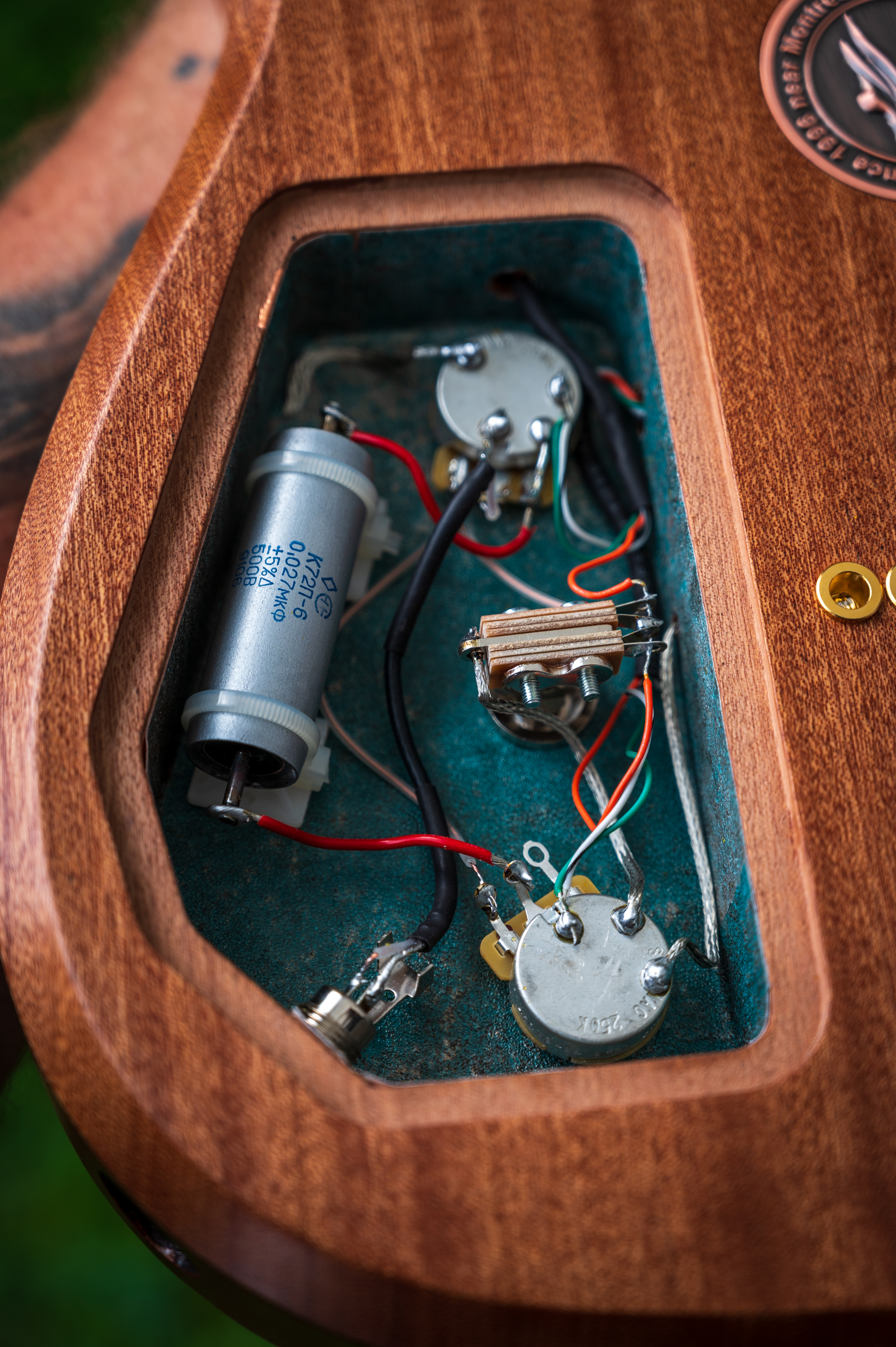
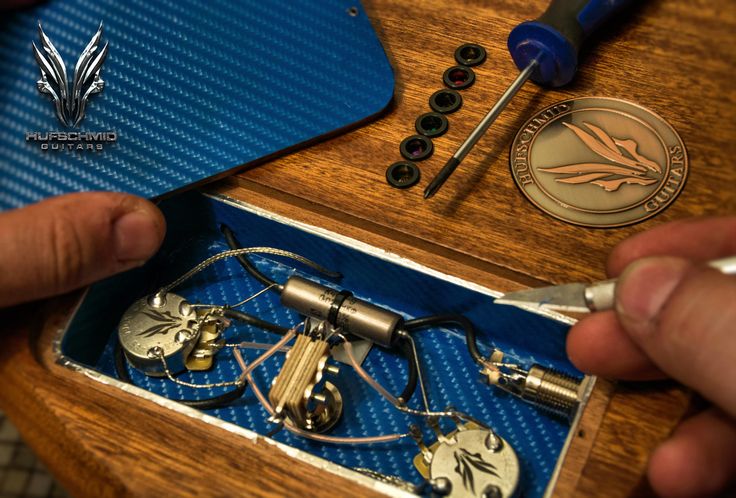
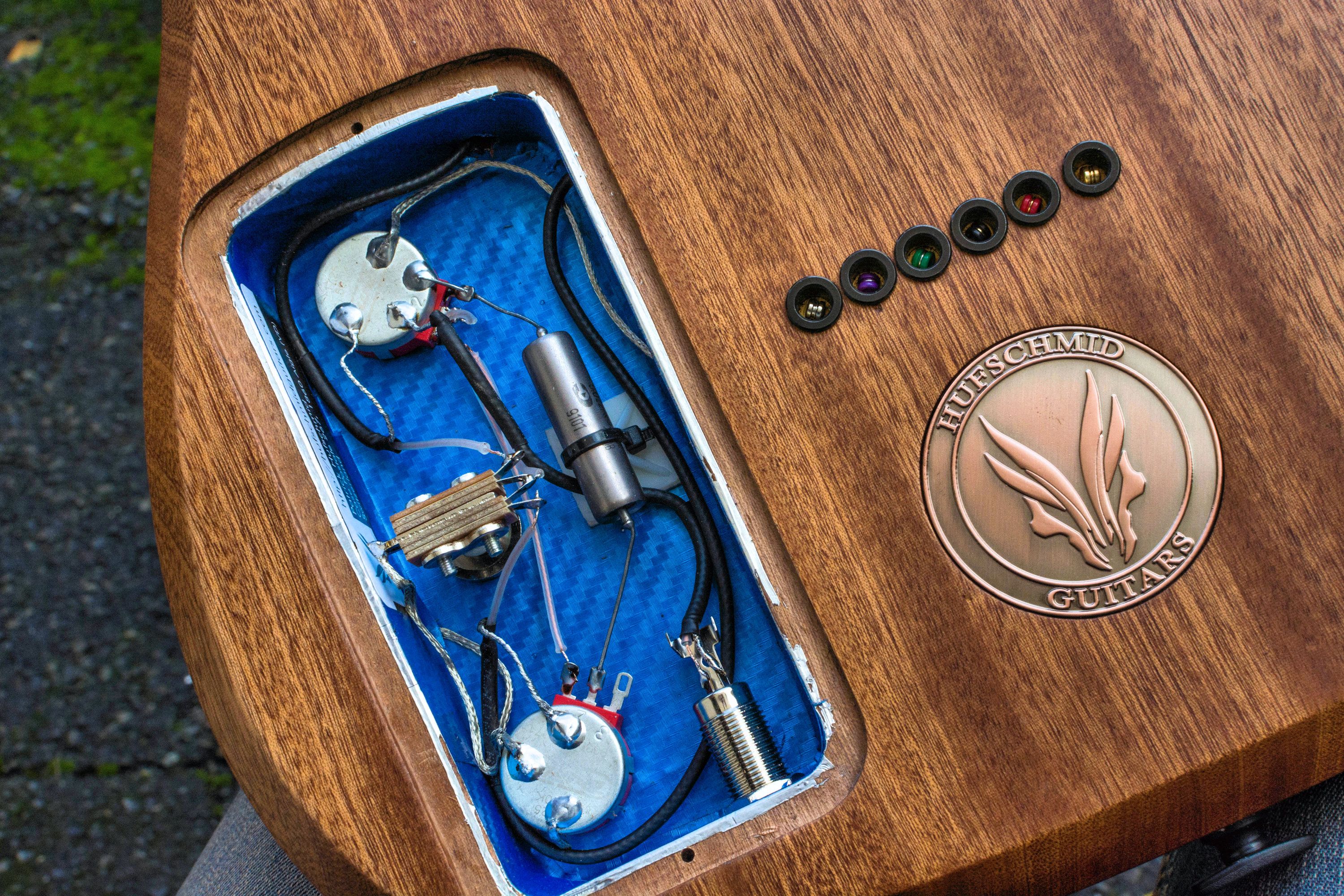
The K72P-6 PTFE (Teflon) Capacitor
The silver cylindrical capacitor you’ll sometimes see inside my guitars is a NOS Russian K72P-6, manufactured for high-precision military and aerospace applications during the Soviet era.
It uses PTFE (Teflon) as its dielectric - one of the most stable and durable materials ever created for electronics. PTFE capacitors are known for their exceptional tolerance, temperature stability, and long-term reliability.
This part is dramatically oversized for a guitar circuit, but I use it deliberately - as a visual and historical statement that reflects my commitment to uncompromising quality and engineering precision.
The KSG-2G Silver-Mica Capacitor
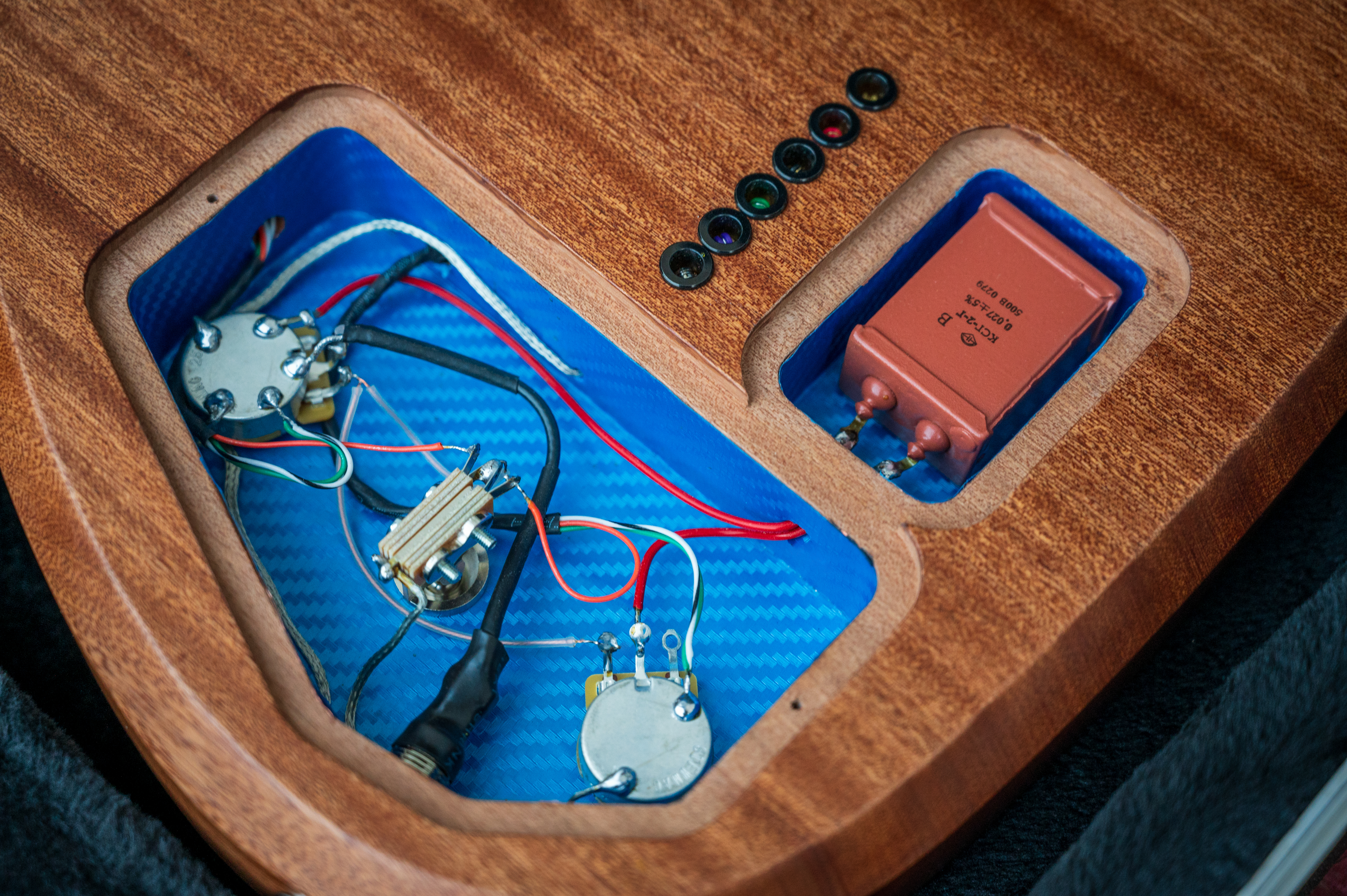
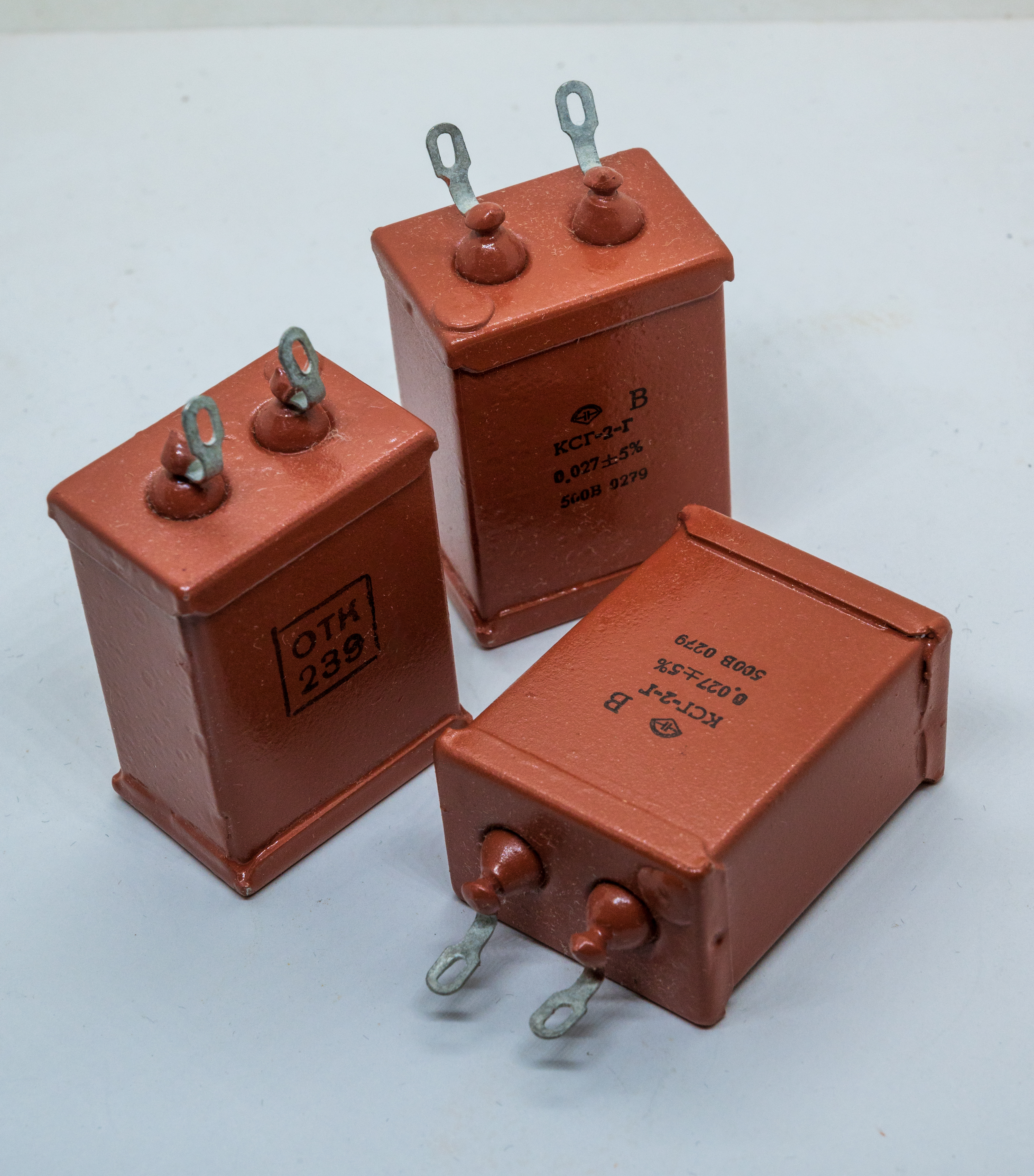
The orange rectangular capacitor is a NOS Soviet KSG-2G, a silver-mica type originally designed for radar and high-frequency communication systems.
Silver-mica capacitors are valued for their remarkable accuracy and extreme long-term stability. I display this capacitor inside a plexiglass chamber, both to protect it and to showcase it as a small piece of history integrated into each instrument.
K72P-2 Teflon Capacitor
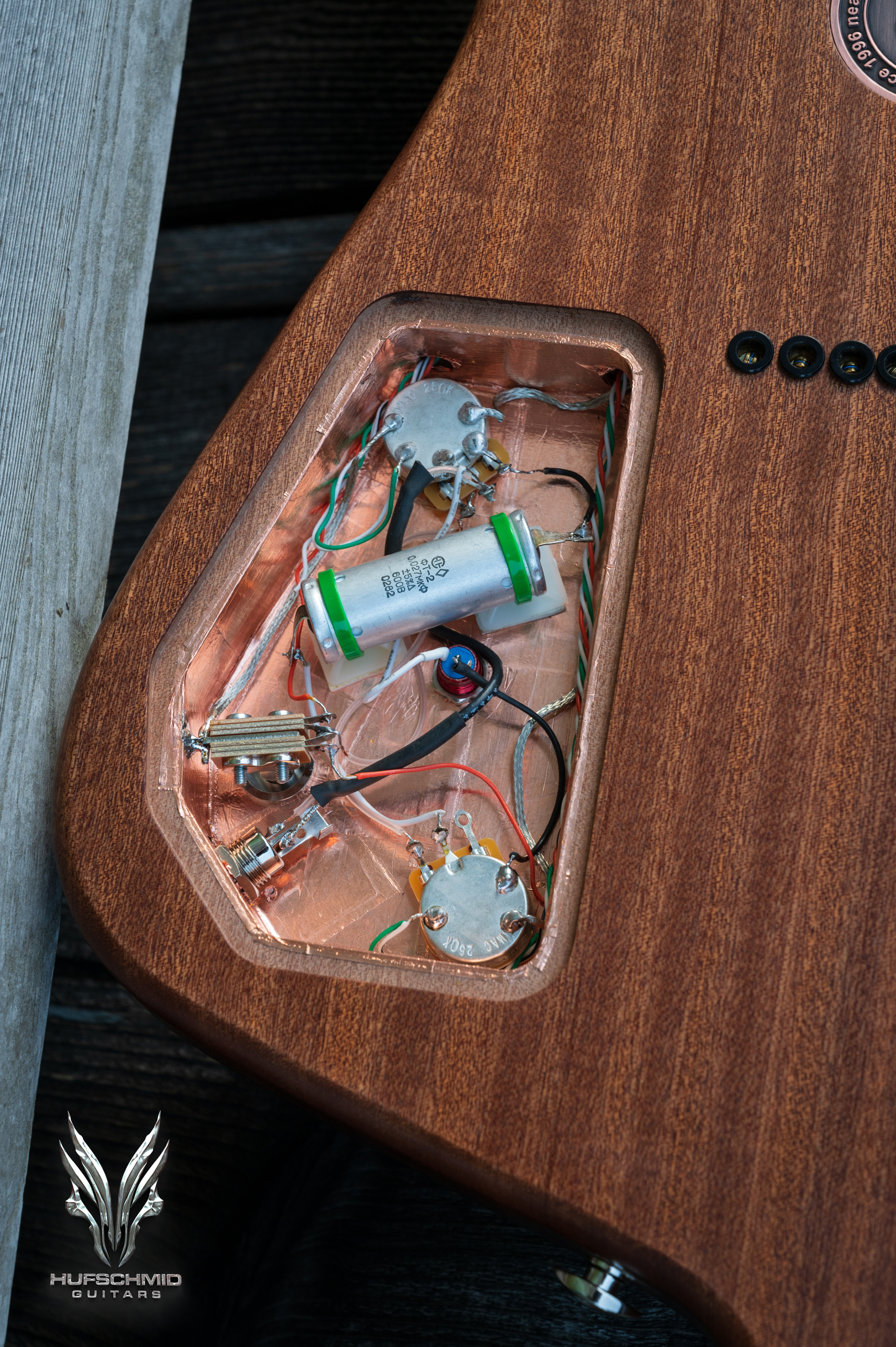
The K72P-2 is a NOS Soviet PTFE (Teflon) capacitor, originally manufactured for military and aerospace applications requiring extreme precision and durability.
The use of PTFE as the dielectric material gives these capacitors extraordinary thermal stability, low dielectric absorption, and negligible signal loss - properties that made them ideal for high-frequency and critical instrumentation circuits.
In my guitars, I use them exclusively in the tone control circuit, where only the capacitance value determines how the tone potentiometer behaves. They don’t “change the sound” - they define the responsiveness and control curve of the tone knob. Their oversized metal bodies serve as both a visual statement and a tribute to Cold War engineering excellence.
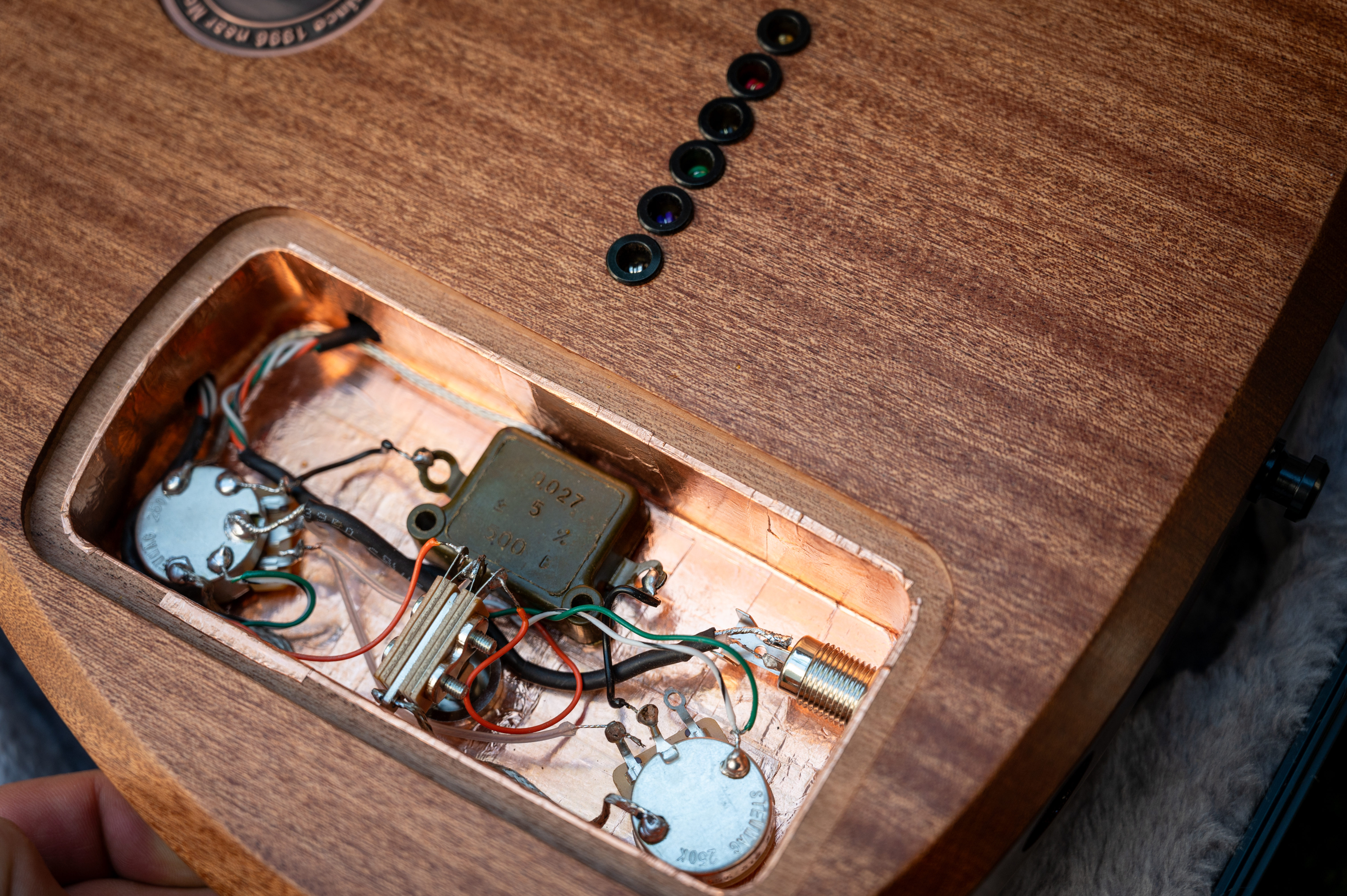
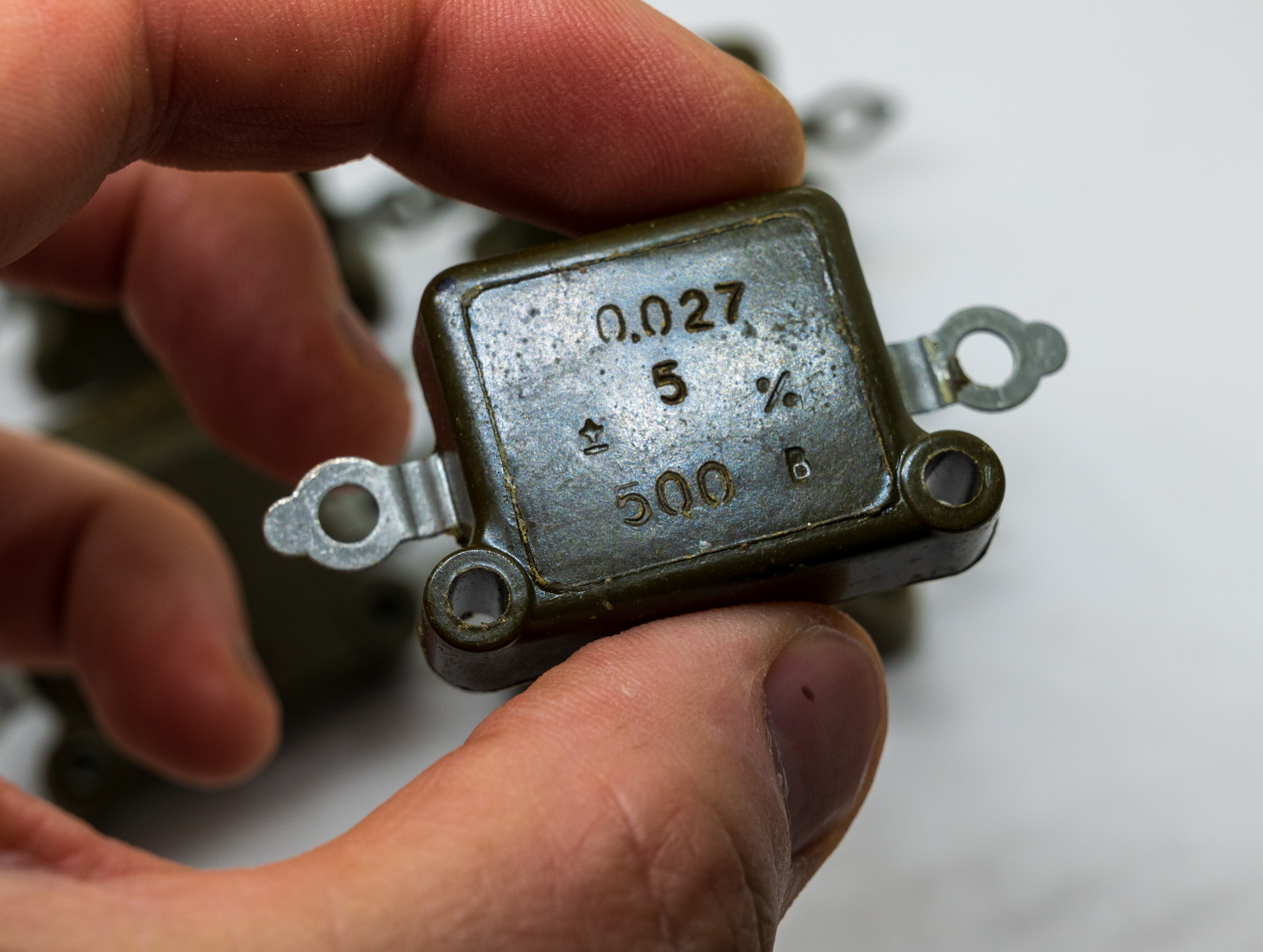
KSG-2 Silver Mica Capacitor
The KSG-2 is a Soviet silver-mica capacitor, another masterpiece of precision engineering. These were designed for radar, communications, and laboratory-grade equipment, where long-term accuracy and stability were essential.
Silver-mica capacitors are renowned for their incredible consistency, tight tolerances, and minimal drift over time - qualities that make them some of the most reliable components ever produced.
I use them in the same role: within the tone control circuit, specifically at 0.027 µF, a value I selected after extensive testing to make the tone control more progressive and usable across its entire range. The KSG-2 embodies both functional precision and historic character, perfectly aligned with my philosophy of blending scientific rigor with artisanal craftsmanship.
Technical Purpose - Not Tone Mythology
These capacitors are used only for the tone control circuit, where they define how the control behaves electrically.
In simple terms, the capacitor and the potentiometer form a low-pass RC filter, which determines how much of the high-frequency content is gradually reduced as the tone knob is turned.
What truly matters here is the capacitance value, not the brand, size, or material. The capacitor itself does not alter or “color” the inherent sound of the guitar - it only sets the range and progression of the tone control.
I never claim any “magical tonal properties” from these parts; they are chosen for their precision, reliability, and aesthetic presence - nothing more, nothing less.
Why the Unusual Value: 0.027 µF
Most guitars use either 0.022 µF or 0.047 µF capacitors for the tone circuit.
After extensive testing, I found that 0.027 µF provides the most balanced and usable response. It allows the tone control to function progressively - not too dark, not too subtle - giving the player real control over the instrument’s frequency roll-off.
In short, these capacitors are not about changing the sound - they are about refining control. They represent a philosophy of precision, reliability, and aesthetic intention: engineering excellence serving craftsmanship.
Over a decade ago, I used to work with the well-known K40Y-9 paper-in-oil capacitors - a model that has become almost legendary among guitar enthusiasts and “vintage tone” purists. These capacitors gained fame for their association with classic instruments and amplifiers, and many still believe they provide a so-called “warmer” or “smoother” sound.
In reality, that reputation is based more on nostalgia than on physics. The K40Y-9 uses paper soaked in mineral oil as its dielectric - a material that naturally ages, absorbs moisture, and eventually leaks or dries out. Over time, this causes the capacitance to drift, the insulation to degrade, and the component to fail completely. Some even become microphonic, picking up mechanical vibration and noise inside the circuit.
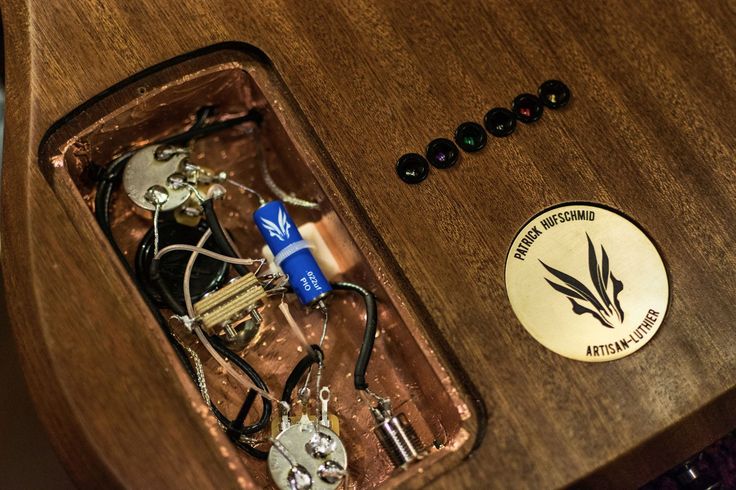
What is often perceived as “vintage tone” is, in truth, the unpredictability of a decaying component. That’s why I completely abandoned paper-in-oil technology and moved to Soviet PTFE and silver-mica capacitors, which are hermetically sealed, non-hygroscopic, and chemically stable. Unlike paper-in-oil types, these parts will never degrade, never leak, and will hold their precise value for decades or even centuries.
To my knowledge, I am the first and only guitar builder in the world to have integrated these specific historical, high-grade capacitors into electric guitars. This concept - the individual use of these capacitor types in this context - is officially protected through a preuve d’antériorité, establishing my copyright ownership of the idea. It is documented and verifiable, confirming my position as the originator of this unique approach.
Copyright registrations:
- NOS Soviet KSG-2G Silver-Mica Capacitor in Guitar - ©777FtAzJ7mkPYo82
- K72P-6 PTFE Capacitor in Guitar - ©B6oZIrz4kPSYNyhe
- KSG-2 Silver-Mica Capacitor - ©lQTPJ3A3efb9lw0B
- K72P-2 Teflon Capacitor - ©Uy6VlWI7gk3Y2Ejc
I use these components not for hype or vintage mystique, but because they embody what I stand for - functional perfection, long-term reliability, and the beauty of purposeful engineering.