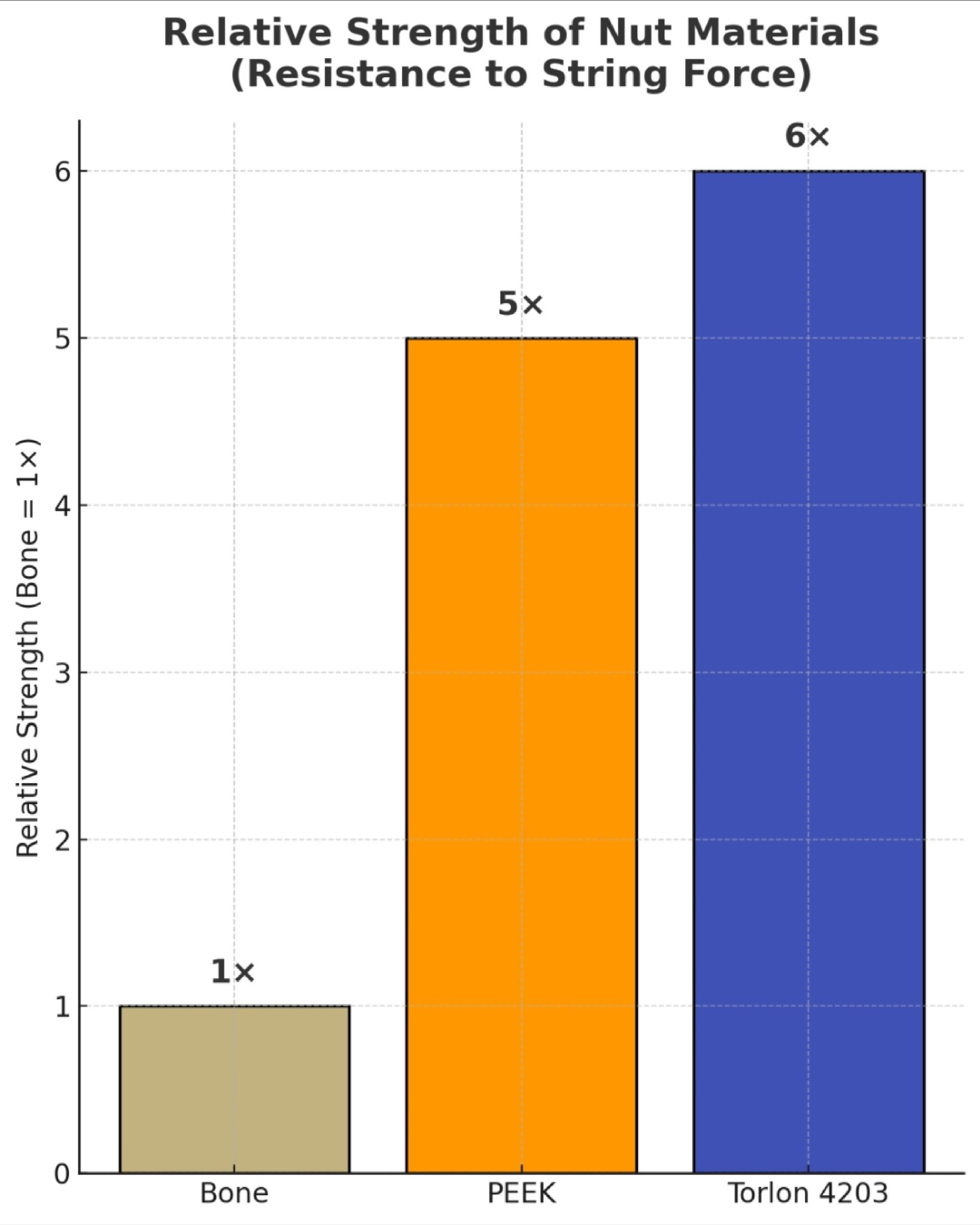
Torlon 4203 and PEEK (Polyether Ether Ketone) Guitar Nuts
Two Decades of Experimentation
Here’s a picture of me back in 2003, holding one of my early V designs featuring a red nut made from a specific thermoplastic. I’m still using this material today for crafting some of my plectrums, under the name HUFTRON. Even at that time, I was already experimenting with advanced polymers in my builds.
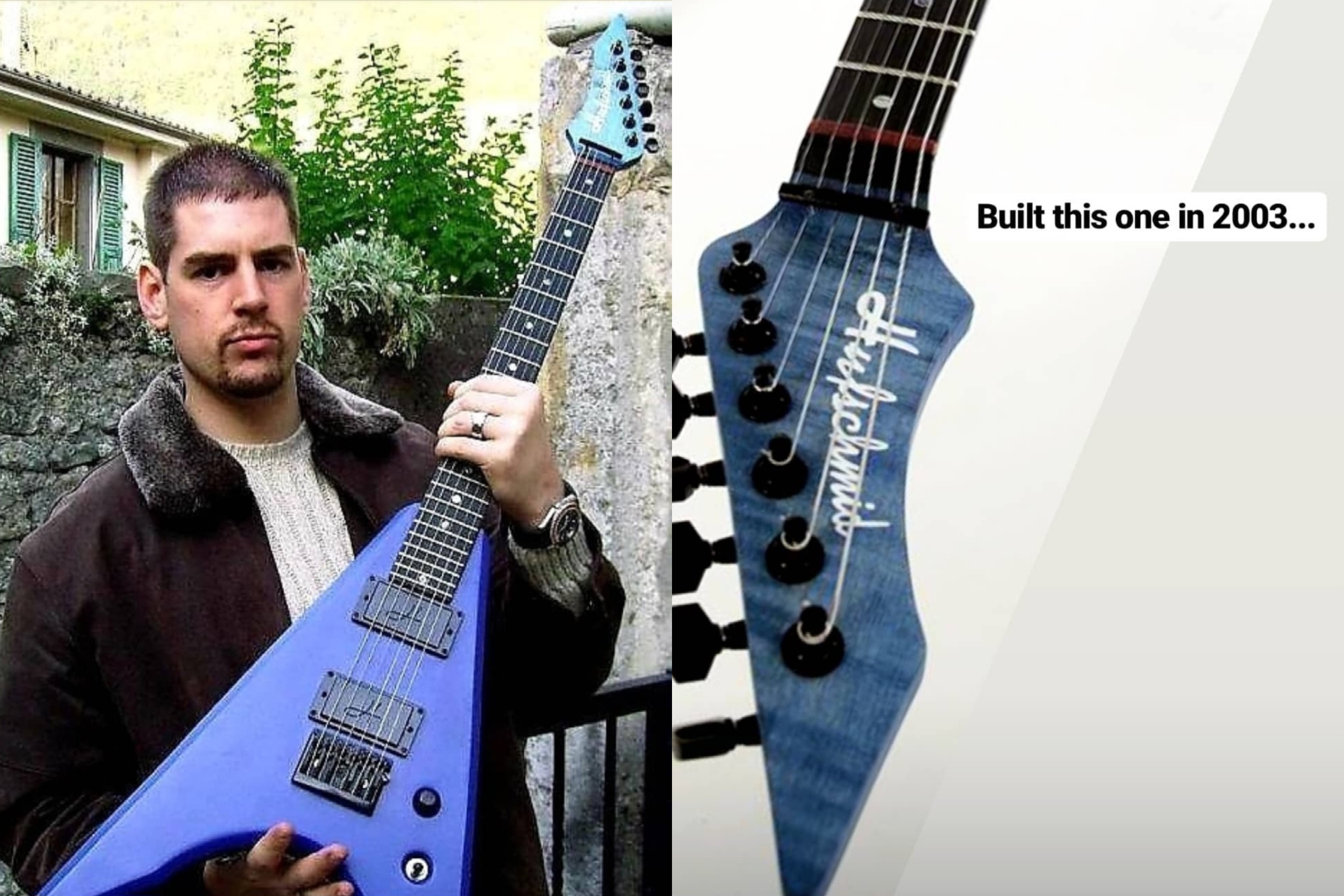
Even at that time, I was already experimenting with advanced polymers in my builds. That was over two decades ago, and it clearly shows that my approach to innovation through high-grade thermoplastics has been a continuous, evolving journey, not a recent discovery.
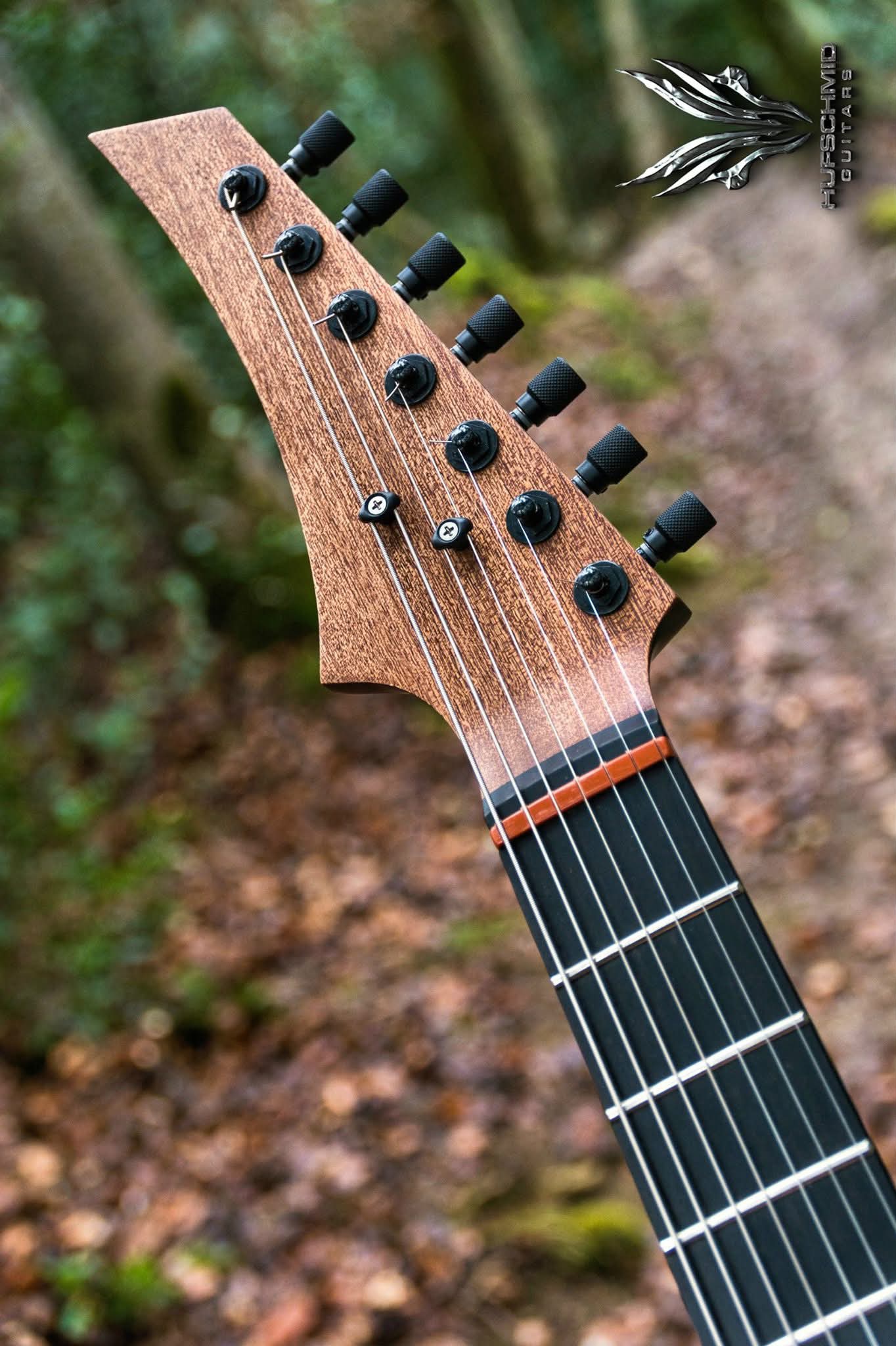
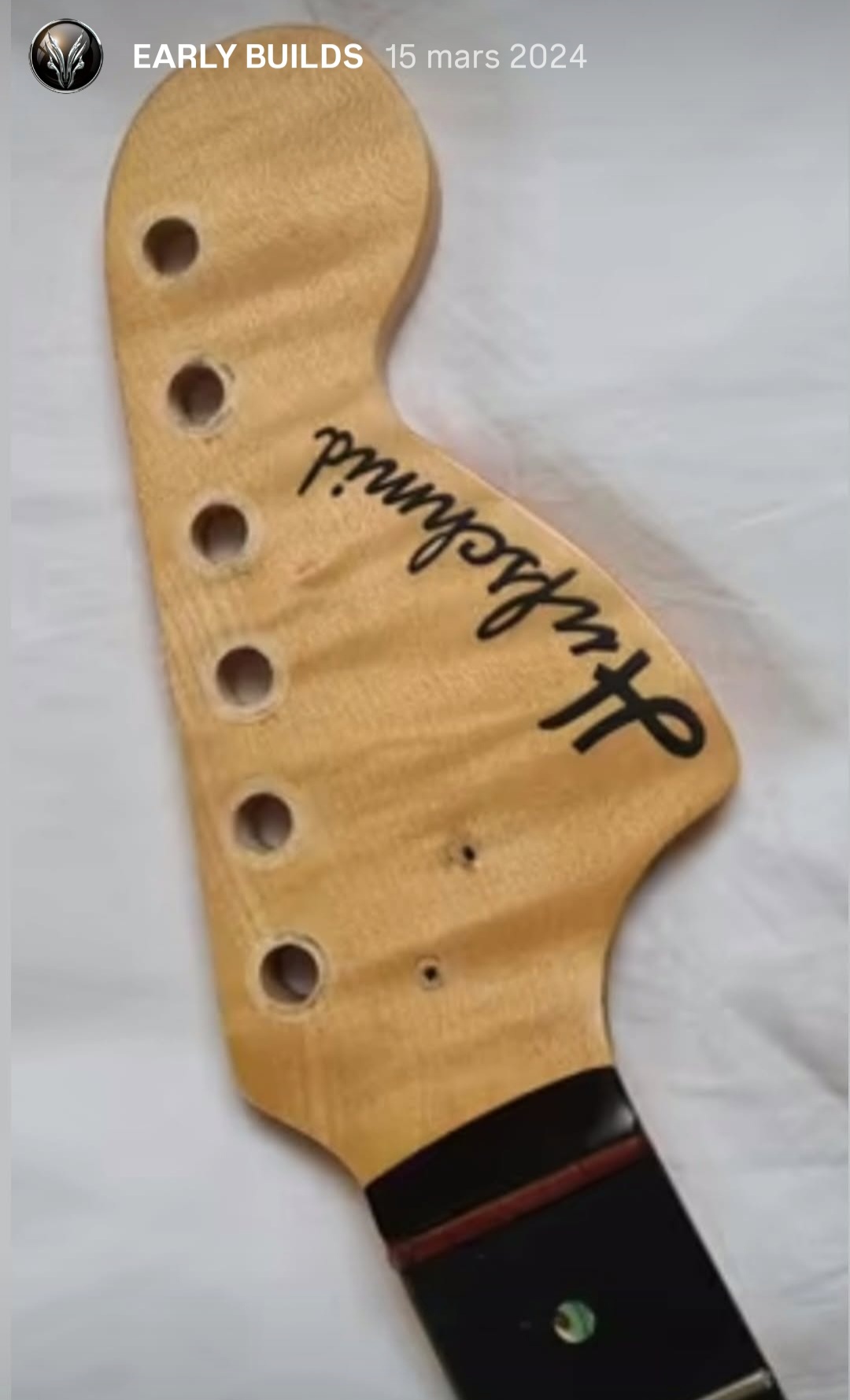
What I do today with Torlon and PEEK is simply the natural continuation of that same path.
Engineering Meets Craftsmanship
My journey with Torlon and PEEK began back in 2010, when I started experimenting with these advanced polymers while crafting plectrums in my workshop. Their remarkable vibration transmission and tactile precision immediately caught my attention.
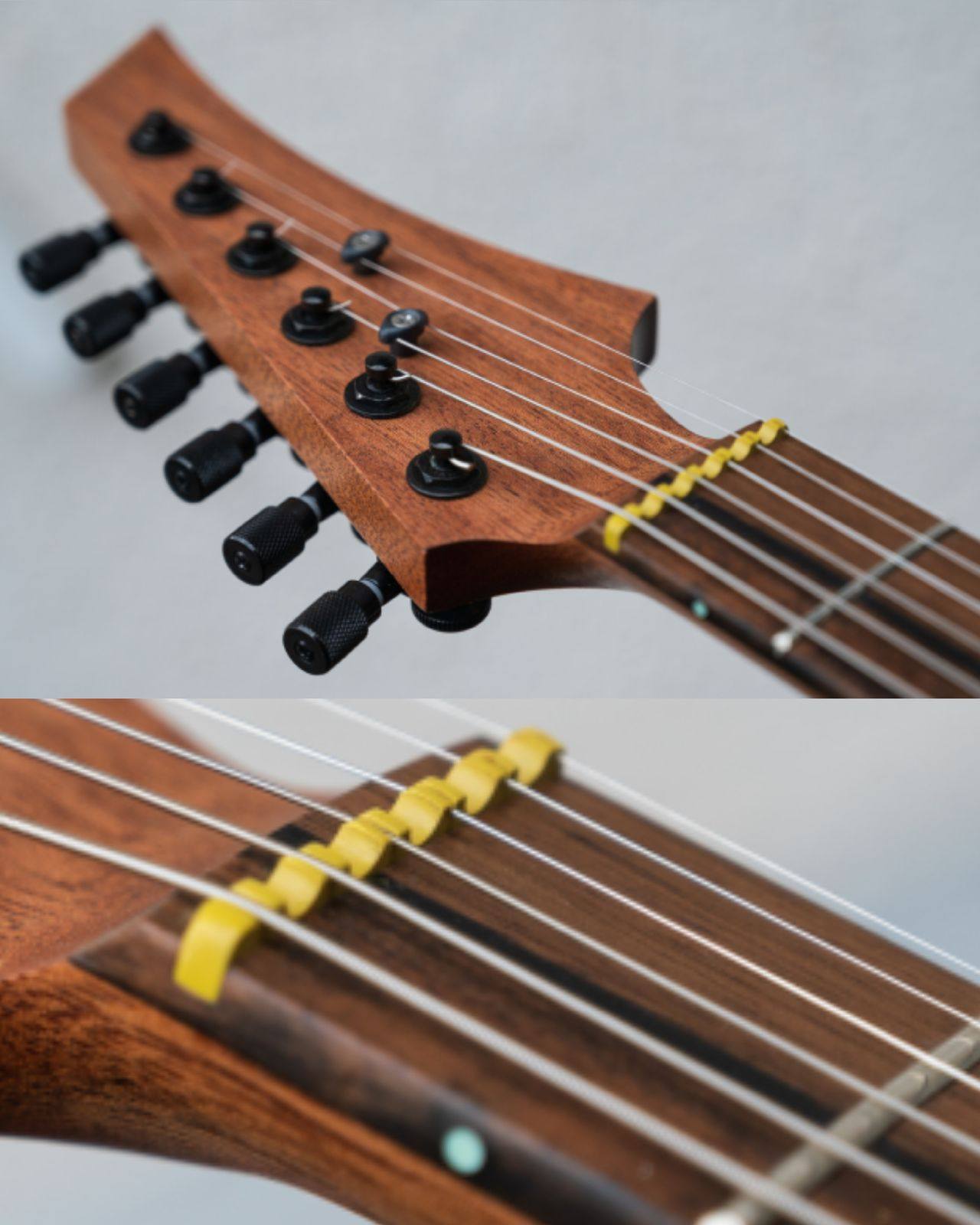
At that time, no one in the guitar world had ever used such materials — and I was the first to introduce both Torlon and PEEK into the realm of guitar making. What began with plectrums soon evolved into a broader exploration of how these aerospace-grade thermoplastics could be integrated into other parts of the instrument.
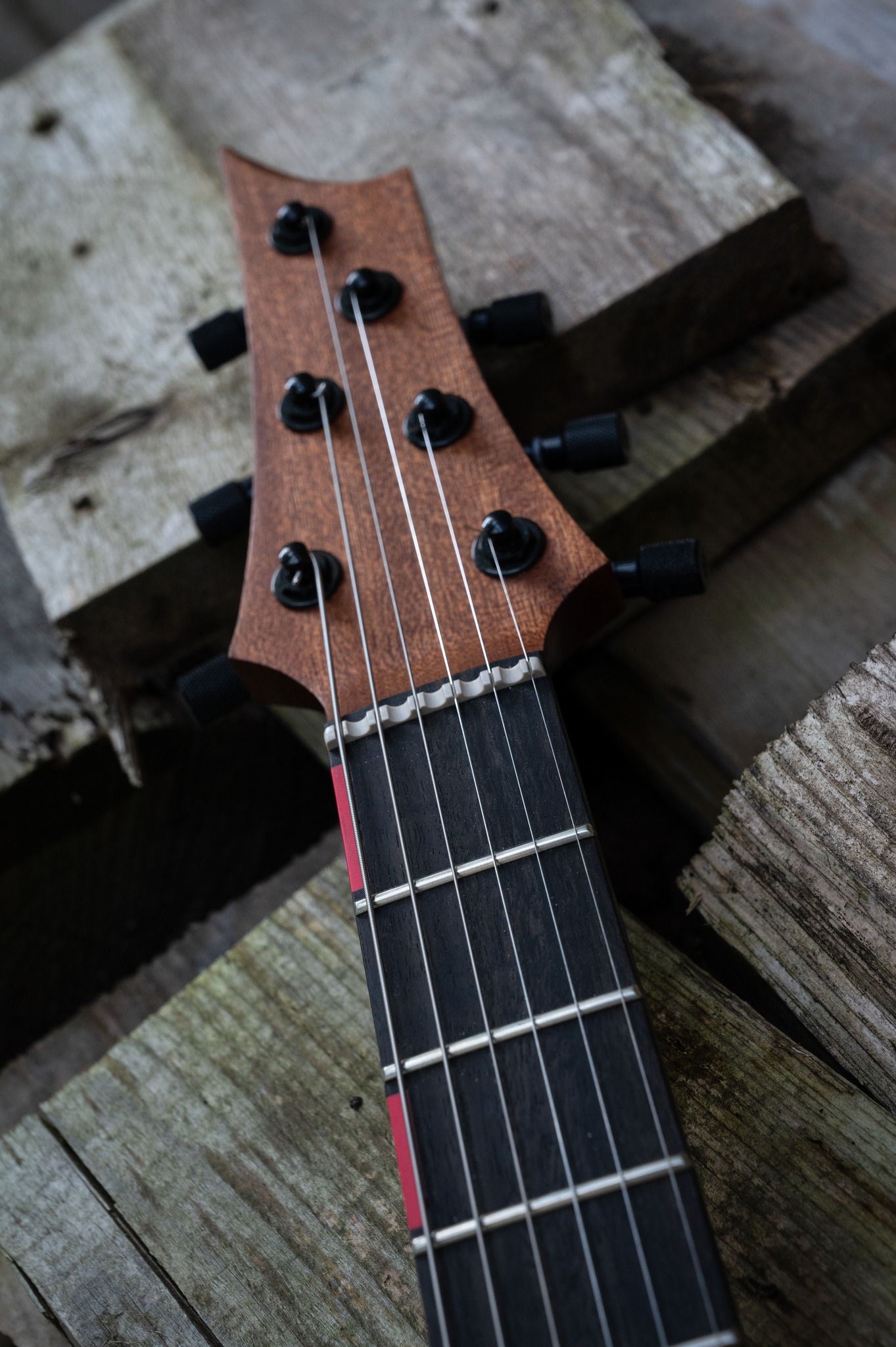
Although we’re speaking about electric guitars — where acoustic resonance is secondary — these materials exhibit mechanical behavior, consistency, and stability far beyond anything traditionally used in lutherie.
A Step Before Torlon and PEEK
Before transitioning to Torlon and PEEK, I spent several years using blue nuts made from a high-performance PPS (polyphenylene sulfide) called Techtron HPV.
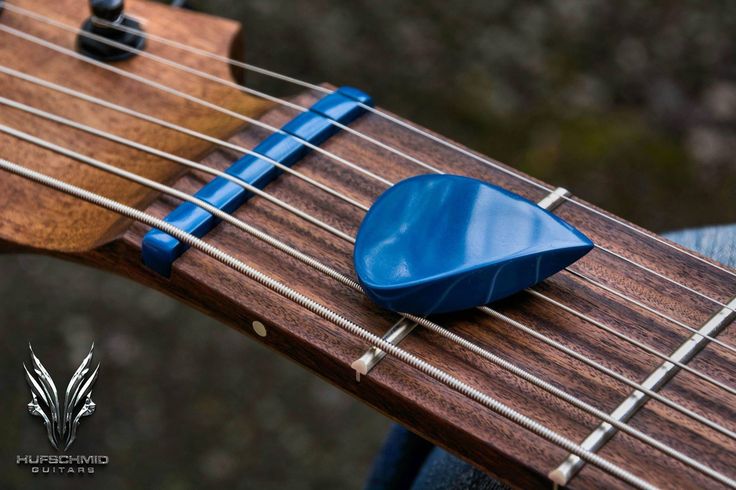
This material was already a major advancement compared to standard PPS — the same polymer base used to manufacture TUSQ, which is common in the guitar industry.
Techtron HPV PPS is an internally lubricated, reinforced thermoplastic, meaning the solid lubricants are built directly into the material. This gives it very low friction, excellent wear resistance, and high dimensional stability even under heat or mechanical stress. Its deep blue color became instantly recognizable on my instruments, and for many years, those “blue nuts” were a signature element of my guitars.
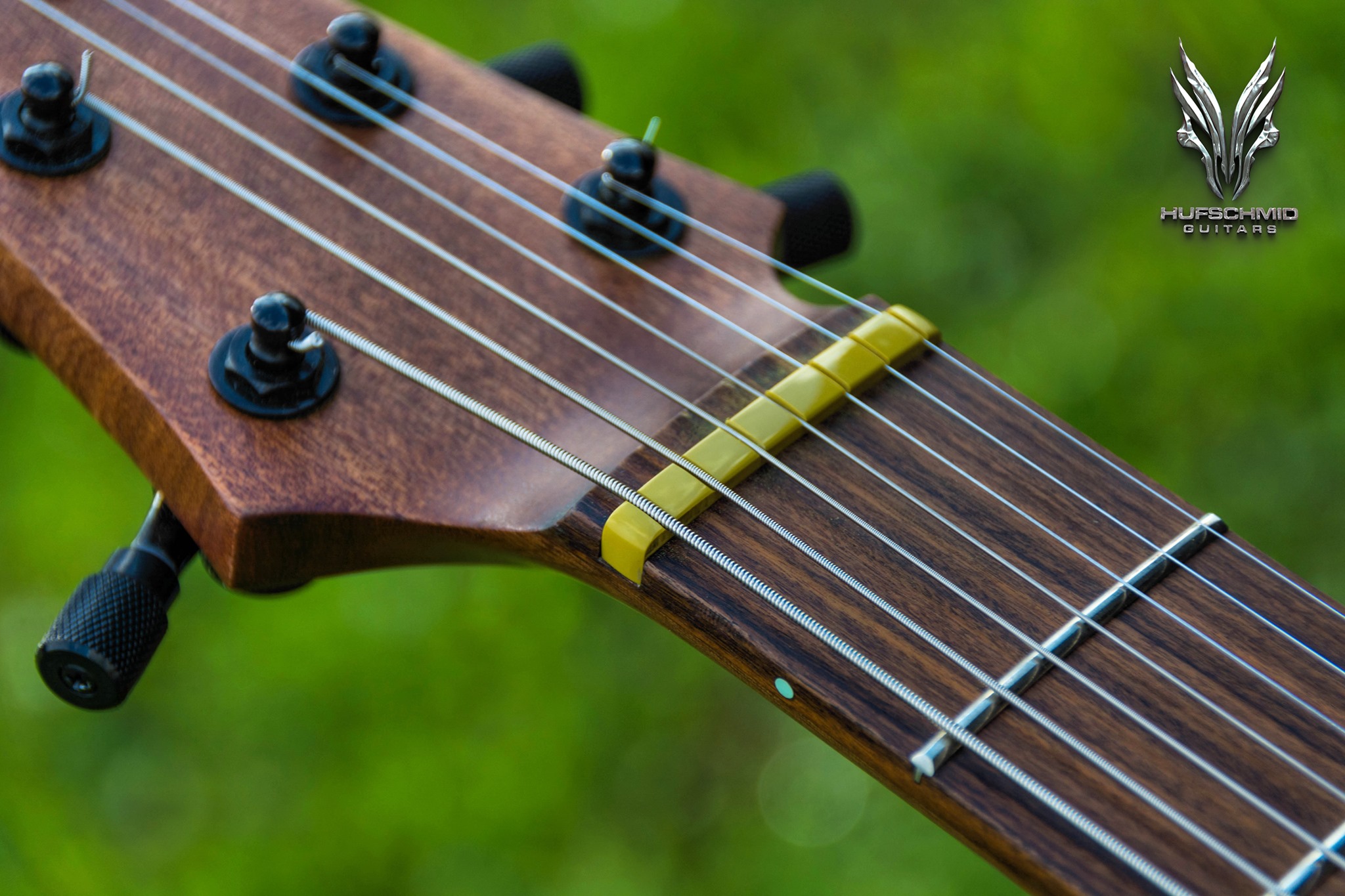
However, when I discovered Torlon 4203 and PEEK, it was clear that these materials were on an entirely different level. Both exhibit superior vibration transmission, strength, and durability, making them the ultimate evolution of this long material journey.
Why These Materials Are Different
Traditional guitar nuts are made from bone, TUSQ (PPS), or Delrin. While functional, none of these materials can match the strength, precision, and long-term reliability of Torlon 4203 and PEEK (Polyether Ether Ketone).
Both are self-lubricating, with an extremely low coefficient of friction, ensuring smooth tuning, minimal string wear, and permanent dimensional stability. They are also chemically inert, temperature resistant, and mechanically far stronger than any nut material ever used in guitar making.
Originally developed for aerospace and precision mechanical engineering, Torlon and PEEK bring a level of engineering excellence that is light-years ahead of bone or synthetic substitutes.
The Visual Signature
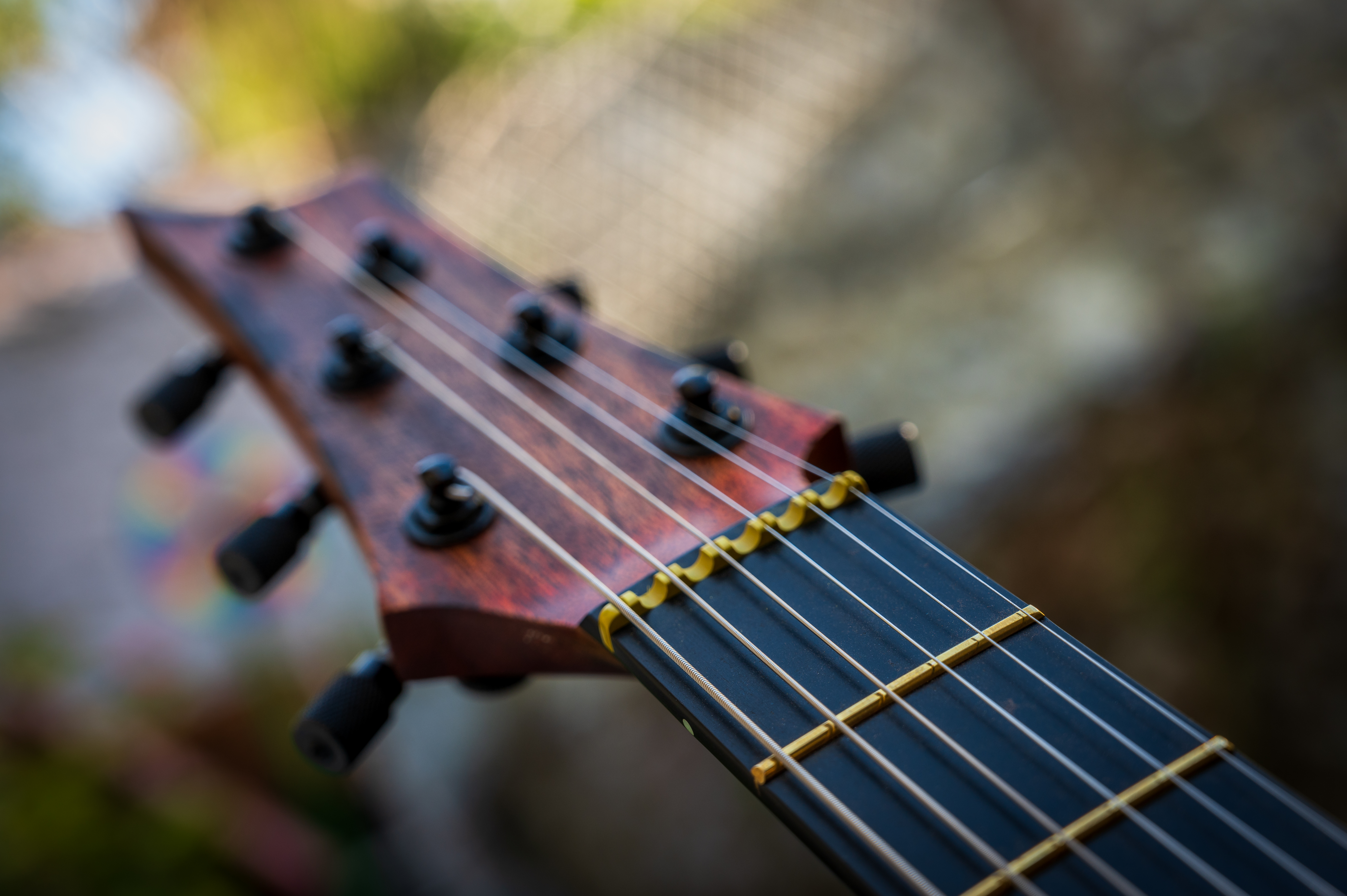
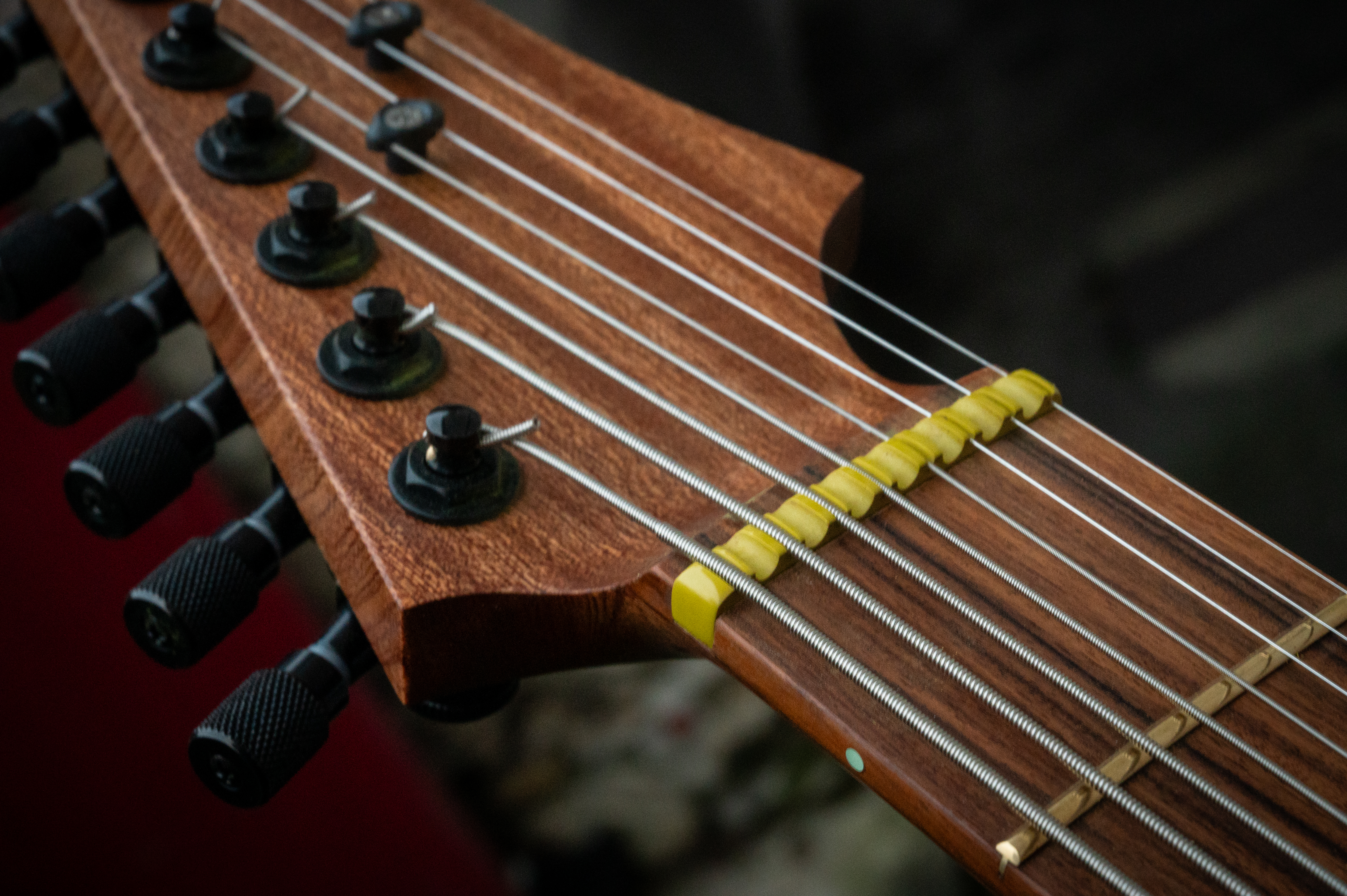
The yellow Torlon nut has now become a defining visual signature of my instruments. When you see that warm amber nut on a headstock, you immediately know it’s a Hufschmid Guitar. It represents both technical innovation and a distinct design identity.
Scalloped Design
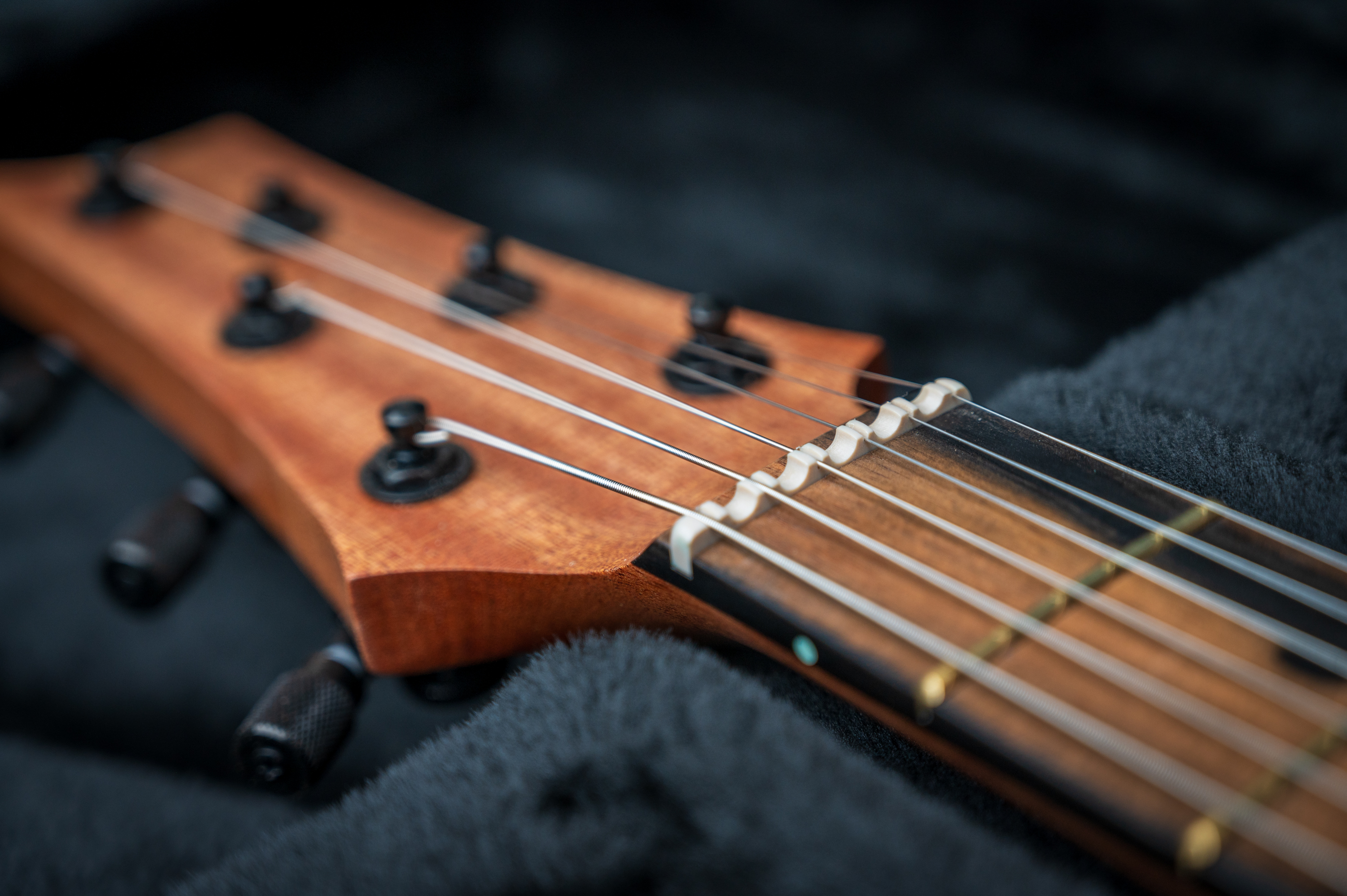
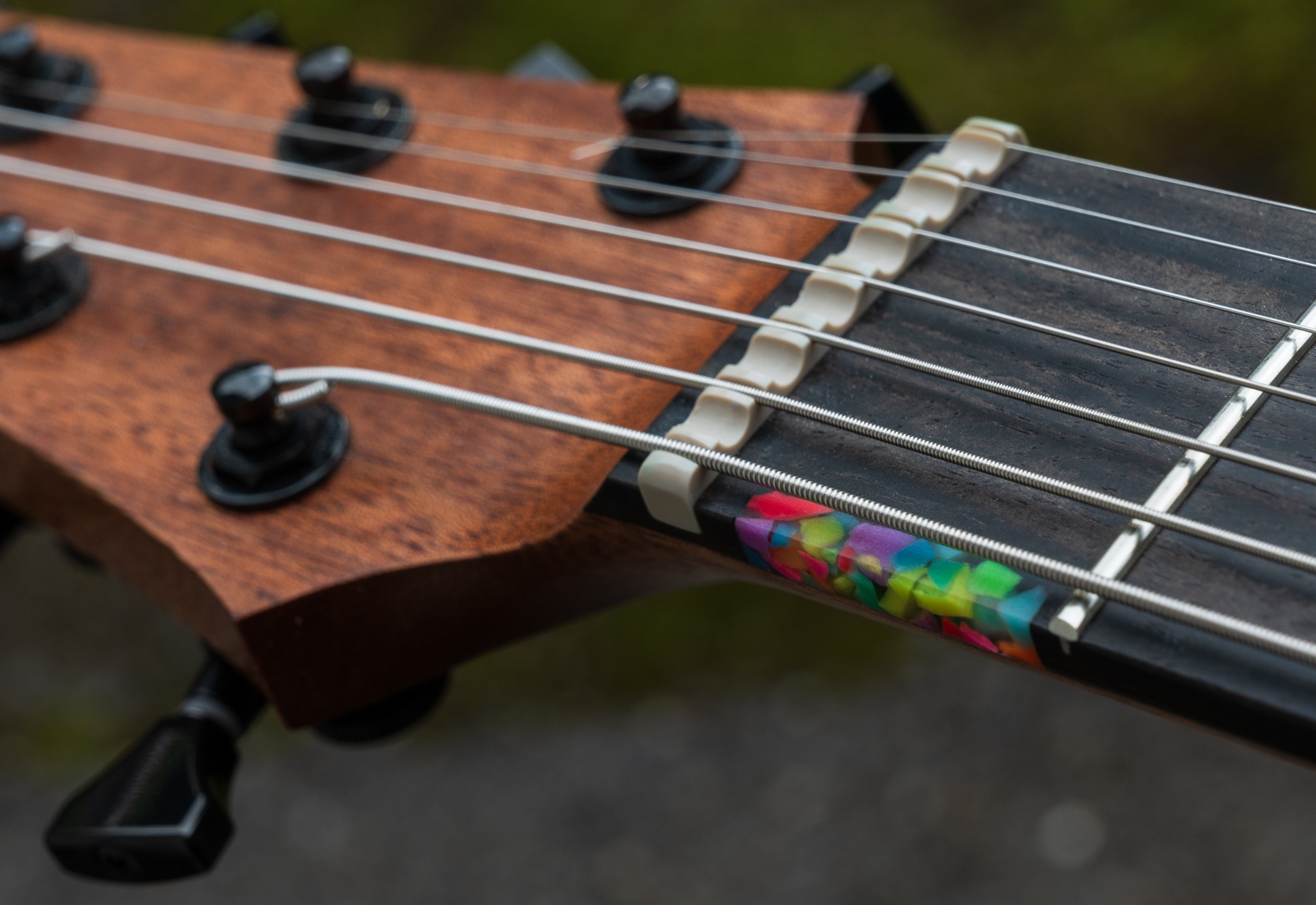
The scalloped nut design I created is inspired by the traditional shaping of bone nuts found on high-end acoustic guitars. In my electric guitars, this scalloping is purely aesthetic — it doesn’t alter tone or structure — but it provides a refined, sculptural look that blends classical influence with modern precision. Each client can choose whether they prefer their nut scalloped or standard.
Protected Innovation
As the first and only luthier to introduce Torlon 4203 and PEEK into the guitar world, and to apply them to nut design, this concept is officially protected through a preuve d’antériorité (copyright recorded).
This innovation reflects my philosophy perfectly: blending time-honored craftsmanship with cutting-edge materials, creating instruments that are visually unique, mechanically superior, and built to endure for generations.